

Birding in Orleans MA: Best Spots and Seasons
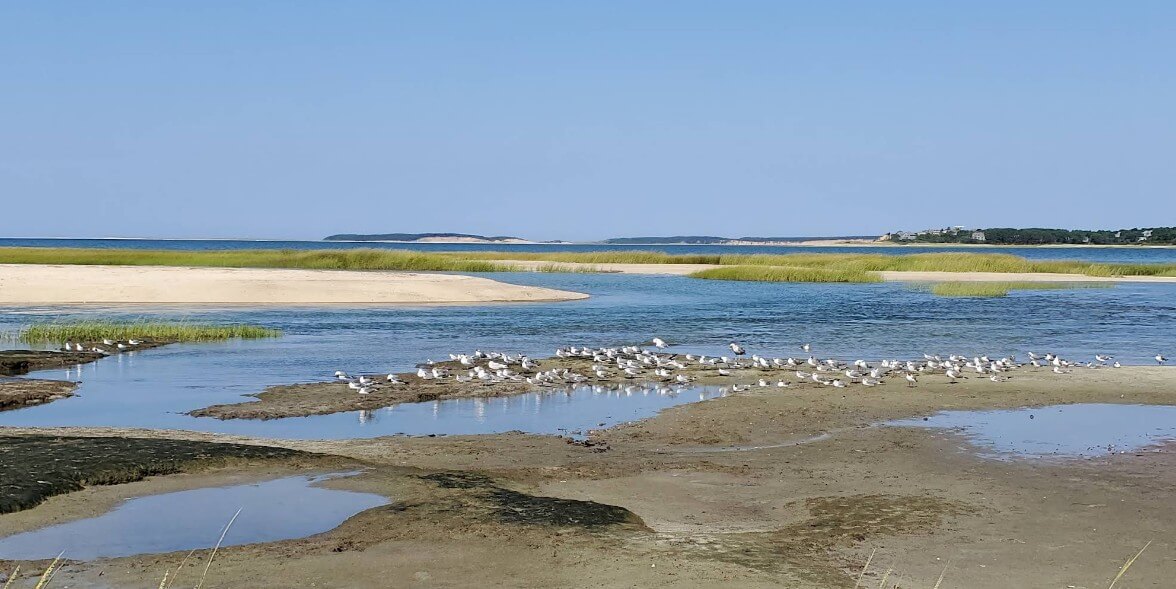
Orleans, MA, sits where Cape Cod Bay, Nauset Marsh, and the open Atlantic meet within a few minutes' drive of one another. That tight cluster of habitats is what makes birding in Orleans, MA so productive across every season. You can scan a tidal flat for shorebirds, walk a sheltered conservation cove, and watch ocean birds from an Atlantic beach in a single morning.
The best birding spots in Orleans are Nauset Beach, Skaket Beach, Kent's Point Conservation Area, Nauset Marsh, Rock Harbor, and Town Cove. Spring and fall bring the strongest migration.
Summer is the season for breeding shorebirds and nesting protections. Winter concentrates sea ducks, loons, and gulls along the coast and in calm coves. Use the right tide and the right season for each location, and your sightings improve dramatically.
The best places for birding in Orleans, MA are Nauset Beach, Skaket Beach, Kent's Point Conservation Area, Nauset Marsh, Rock Harbor, and Town Cove. Visit Skaket on low or rising tides for shorebirds, Nauset for ocean birds and winter sea-watching, Kent's Point for a short conservation walk, and marsh edges during spring and fall migration.
Best Birding Spots in Orleans MA
Orleans packs three distinct coastal environments into one small town: the surf-driven Atlantic shore, the wide bay-side tidal flats, and the quiet salt marsh and cove system in between. Each environment draws a different set of birds, so the location you choose shapes what you are likely to see. The five spots below cover the full range, and each one connects to a dedicated Orleans guide for parking, access, and logistics.
Nauset Beach and the Atlantic shoreline
Nauset Beach is the place for ocean birds. The long Atlantic barrier beach faces open water, which makes it the strongest spot in Orleans for sea-watching. In the colder months, you can find sea ducks rafting offshore, common loons working the surf line, and gulls patrolling the wrack.
During migration, terns and shorebirds move along the shore, and the dune edge holds songbirds in the fall. Nauset sits on the Atlantic Flyway, the main migration corridor that carries millions of birds between northern breeding grounds and southern wintering areas.
A spotting scope helps at Nauset because much of the action happens at a distance over the water. Bring one if you have it, but binoculars still reveal plenty along the surf line and dunes. For beach access, facilities, and general visit planning, see the full Nauset Beach guide. Nauset also forms part of the Cape Cod National Seashore, the protected coastal area that anchors much of the region's birding.
Skaket Beach tidal flats
Skaket Beach is the shorebird flat. On the bay side of Orleans, Skaket exposes a vast stretch of sand and mud at low tide, and those flats are a feeding ground for migrating shorebirds. Look for semipalmated sandpipers, short-billed dowitchers, and black-bellied plovers picking across the wet sand, especially from mid-July through August when southbound shorebirds pass through.
Tide timing matters more at Skaket than almost anywhere else in Orleans. The flats extend a long way at low water, so birds can be distant. Low and falling tides expose the richest feeding lines, while a rising tide pushes birds closer to shore and to easier viewing.
Plan your visit around the tide chart, not just the clock. For tide windows, parking, and sunset planning at this beach, the Skaket Beach guide has the full detail.
Kent's Point Conservation Area
Kent's Point is a short, accessible walk. This conservation area juts into the sheltered waters where Frost Fish Cove, The River, and Lonnie's Pond meet, giving you a mix of woods, shoreline, and quiet cove edge on an easy loop. Ospreys hunt the coves in the warm months. In winter, the protected water holds bufflehead, goldeneye, and other waterfowl that prefer calm conditions over open surf.
Because the trail is short and gentle, Kent's Point is a good choice for beginners or anyone who wants productive birding without a long hike. Keep your birding visit focused on the habitat and the birds, and use the dedicated Kent's Point Conservation Area guide for trail length, parking, and accessibility details.
Nauset Marsh and the Salt Pond area
Nauset Marsh is the wading-bird and migration hub. This broad salt marsh system sits inside the Cape Cod National Seashore and serves as a gateway to some of the richest habitats on the Outer Cape. Herons and egrets work the marsh channels through the warm months. During spring and fall, the marsh edges fill with migrants moving along the coast. The National Park Service names Nauset Marsh among its notable birding places.
The Salt Pond Visitor Center at 50 Nauset Road in Eastham is open year-round and stocks free trail maps, ranger program schedules, and wildlife checklists. It is the logical first stop for marsh-area planning.
For visitor-center access, fees, and trail logistics across the protected area, use the Cape Cod National Seashore from Orleans guide. To explore the marsh and surrounding wetland trails on foot, the Orleans salt marshes and trails guide covers the routes.
Rock Harbor, Town Cove, and sheltered landings
Rock Harbor and Town Cove are the easy-viewing coves. These calm, protected waters are the most comfortable spots in Orleans for winter waterfowl watching, because you avoid the wind and distance of the open Atlantic. Rock Harbor on the bay side draws gulls, waterfowl, and the occasional wader, and it is a classic sunset location. Town Cove offers sheltered viewing close to downtown.
Both are good options when the ocean is too rough or cold for comfortable scanning. You can often bird them from the car or a short walk. For harbor and sunset context at Rock Harbor, see the Rock Harbor Beach guide. If you are driving between several of these spots, check current rules first using the Orleans parking rules guide, so a permit question does not cut your morning short.
Best Seasons for Birding in Orleans
Orleans produces quality sightings in all four seasons, but each one favors different birds and locations. Cape Cod National Seashore provides habitat for more than 370 bird species, with roughly 80 of them breeding locally and the rest passing through on migration or staying for the winter.
The seashore's mix of freshwater ponds, salt marsh, dunes, woodland, and intertidal flats is what supports that range. Here is how the year breaks down for a birder planning a visit.
Spring: arrivals and beach nesting
Spring is the migration and nesting season. From late April through May, shorebirds and terns move along the Atlantic coast, and herons and egrets return to Nauset Marsh. This is also when beach-nesting protections begin. Piping plovers arrive on Cape Cod breeding beaches in mid-March, with nesting starting in late spring, and least terns settle into colonies in April and May.
Spring birding comes with responsibility. Symbolic fencing, string strung on wooden stakes, marks protected nesting areas on the beaches. Stay outside it, keep your distance from birds, and expect some beach sections to be closed entirely while chicks grow. These closures shift week to week, so check trailhead postings before you walk.
Summer: breeding birds and southbound shorebirds
Summer combines nesting and the start of fall migration. Through the warm months, piping plovers and least terns breed at Nauset and Skaket, herons and egrets feed in Nauset Marsh, and ospreys hunt at Kent's Point and along The River. Nesting protections remain fully active during this entire period.
Southbound shorebird migration begins surprisingly early. By mid-July, semipalmated sandpipers and short-billed dowitchers start using Skaket's tidal flats on their way south, and numbers build through August. That makes late summer one of the most rewarding windows for shorebird watching on the bay side.
Fall: raptors, sparrows, and seabirds
Fall brings the second great migration push. September and October move raptors, sparrows, and seabirds through the region. Hawk flights pass overhead on favorable winds, sparrows fill the dune edges and field margins, and the first sea ducks begin returning to the Atlantic shore. The marsh and beach edges stay active as southbound birds funnel along the coast.
Fall is also a comfortable time to bird in Orleans. The summer crowds thin out, parking eases, and the weather stays mild enough for long sessions without the heat of midsummer or the wind of deep winter.
Winter: sea ducks, loons, gulls, and quiet coves
Winter is the sea-duck and sea-watching season. The cold months bring sea ducks such as common eider and scoters into nearshore Atlantic waters, with common loons working Cape Cod Bay and gulls present throughout. Calm, clear mornings between storms give the best views, often in the hour after dawn when the wind drops.
The sheltered coves come into their own now. Rock Harbor, Town Cove, and the protected water at Kent's Point hold waterfowl that avoid the open surf, and they let you bird in relative comfort.
Occasional rarities are reported in the region during winter; check current local reports before planning a trip around any rare species. The Salt Pond Visitor Center stays open year-round if you want trail updates before heading out.
How Tides Affect Birding in Orleans
Tide stage controls where shorebirds feed and roost, especially on the bay-side flats. Reading the tide before you go is the single biggest lever you have over your shorebird results in Orleans. The pattern is consistent across Skaket and the marsh edges, so once you learn it you can apply it anywhere on the bay side.
Use this simple framework for tidal-flat birding:
- Low tide: the flats are fully exposed, and shorebirds spread out across the feeding grounds. Birds can be distant, so a scope helps.
- Rising tide: the incoming water pushes birds toward shore and concentrates them, often bringing them into easy binocular range.
- High tide: feeding grounds are covered, so check roost sites where birds gather to wait out the water.
- Falling tide: newly exposed flats draw active feeding lines, a productive window as birds spread back out.
For sea-watching at Nauset, tide matters less than wind and light. Aim for calm mornings with the sun behind you, and let the ocean conditions rather than the tide chart guide your timing.
Beginner Gear and Bird ID Tips
You do not need expensive equipment to enjoy birding in Orleans. A decent pair of binoculars covers most of what you will see at Skaket, Kent's Point, Rock Harbor, Town Cove, and the marsh edges. A spotting scope earns its place for distant sea ducks, loons, and horizon scanning at Nauset, but it is optional elsewhere and unnecessary for beginners.
Build your kit around the basics: binoculars, a field guide or a phone app for identification, and the free eBird app to log and find sightings. Beyond gear, identification improves fastest when you stop chasing field-guide colors and start reading the bird itself. Note its size, bill shape, posture, and how it feeds.
A bird's behavior and the habitat it is using often narrow the choices faster than plumage alone. On a tidal flat, for example, a probing feeder with a long bill points you toward dowitchers, while a quick run-and-stop pattern suggests a plover.
Responsible Birding and Shorebird Protection
Responsible birding around nesting shorebirds means keeping your distance and respecting closures. Cape Cod beaches hold some of the most important piping plover habitat on the Atlantic coast, and the species is protected under the federal and state Endangered Species Acts. The Atlantic Coast population was listed as threatened in December 1985, and beaches here serve as primary breeding sites.
The piping plover (Charadrius melodus) is a small, sandy-colored shorebird that nests and feeds on open coastal beaches, which puts its nests directly in the path of foot traffic and pets.
Follow these guidelines during the nesting season, roughly April through August:
- Stay outside symbolic fencing at all times, and never enter a posted closure.
- Keep your distance from adults and chicks, and back away if a bird changes its behavior because of you.
- Keep groups small and quiet near nesting areas.
- Leave pets at home, because plovers perceive dogs as predators and flush more readily from them than from people.
Least terns (Sternula antillarum) add another layer of caution. They nest in colonies on sandy beaches, and managers cordon off colony areas to keep the near-invisible nests from being trampled. The National Park Service, working with the U.S. Fish and Wildlife Service and state wildlife officials, manages these protections and may close beach sections to pets and kites where shorebirds nest. A spotting scope lets you watch terns and plovers from a respectful distance without disturbing them, which is the ethical way to get a close look.
One-Day Orleans Birding Itinerary
A single day can cover the full range of Orleans habitats if you sequence it around the tide and the light. Start on the Atlantic side at dawn, work the marsh and a sheltered conservation area through midday, and finish on the bay flats as the tide turns. This plan keeps you moving with the birds rather than against them.
Begin at Nauset Beach in the early morning for sea-watching, when the light is behind you and the wind is usually calmest. Next, move to the Nauset Marsh and Salt Pond area for herons, egrets, and migrants along the channels, and pick up a trail map at the visitor center if you need one.
Around midday, walk the short loop at Kent's Point for ospreys in season or sheltered-cove waterfowl in winter. Time your late afternoon for Skaket Beach or Rock Harbor on a low or falling tide, when the flats draw feeding shorebirds, and the cove fills with waterfowl. For a broader off-season trip plan, the winter in Orleans off-season guide pairs well with cold-weather birding.
Plan More Outdoor Time in Orleans
Birding pairs naturally with the rest of what Orleans offers along its bay, marsh, and ocean shores. If you are building a longer trip, start with the Orleans beaches guide for beach selection and logistics, then layer in the specific birding sites above based on the season and tide. The town's compact geography means you are never far from your next habitat.
For your visit, match the location to the season and the tide, respect the nesting closures that protect the shorebirds, and carry binoculars at a minimum. Have a birding question or want current trail and beach conditions before you visit? Reach out to the Orleans Chamber of Commerce for local guidance, and explore the Orleans beaches guide to round out your outdoor plans.