

Biking in Orleans: Trails & Safety Tips
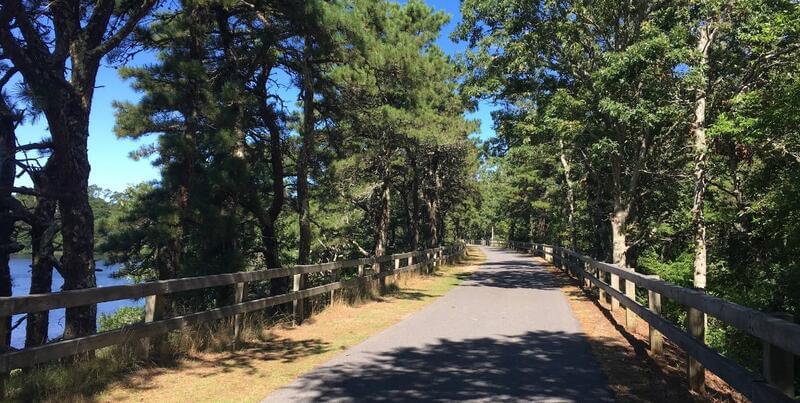
Biking in Orleans delivers smooth paved paths, family-friendly distances, and direct connections to parks and beaches along the Cape Cod Rail Trail. The safest rides start with route choice, correct equipment, and a simple plan for parking, weather, and timing.
Cape Cod cycling visitors benefit from a growing off-road network. Cape Cod’s Vision 88 plan aims to create 88 miles of connected, off-road paved bike paths from Falmouth to Provincetown, with many segments already complete.
Orleans sits near the center of Cape Cod cycling, where the Cape Cod Rail Trail links town paths to Nickerson State Forest in Brewster and the Cape Cod National Seashore in Eastham. Riders find wide, paved mileage with low grades and consistent wayfinding that keeps families together and stress low. Detours to kettle ponds, marsh views, and bay shorelines turn easy miles into memorable days without complicated logistics.
How the Cape Cod Rail Trail anchors rides in Orleans
The Cape Cod Rail Trail (CCRT) is a 25.5-mile off-road paved path that follows the route of the old Cape Cod Railroad through six mid- to lower-Cape towns. It runs from South Yarmouth into Dennis, through Harwich and Brewster (with a detour through Nickerson State Park), into Orleans (including the Rock Harbor area), along a salt marsh to the Cape Cod National Seashore Center in Eastham, and on to Le Count Hollow in Wellfleet.
Within Orleans, the trail passes near Orleans center and heads west toward Brewster and east toward Eastham. Westbound riders connect to Nickerson State Park’s paved loops for shaded rolling segments and pond vistas. Northbound riders continue into Eastham and follow the Nauset Bike Trail spur to reach Coast Guard Beach for Atlantic views.
Orleans functions as both a midpoint and a flexible staging area. Parking close to town places you on the CCRT without much on-street mixing, and nearby trailheads in adjacent towns remain within a short warm-up.
Families can scale distance to comfort because amenities and exit points appear often. The CCRT is also continuously monitored by local police bike patrols, which helps keep it a safe, family-friendly option.
Recent Extensions (2025–2026)
Cape Cod’s paved trail network has continued to close gaps and add mileage:
- Sandwich Route 6 Service Road Pathway (opened 2025): A new 4.5-mile pathway along the Route 6 Service Road in Sandwich opened in 2025, significantly reducing the gap between the Cape Cod Rail Trail and the Cape Cod Canal pathways in Bourne.
- Barnstable Extension (Phase 3, in progress): A 4.4-mile extension from Peter Homer Park (Yarmouth) to Mary Dunn Road (Barnstable) began construction in 2024, with completion expected in 2026. Plans include a new bridge over Willow Street, crossings at Forest Road and West Yarmouth Road, and an 80-space parking lot near Higgins Crowell Road.
Key Orleans connectors you will actually ride
The most used connectors from Orleans to classic ride targets use the CCRT plus short, well-marked spurs:
- West toward Nickerson State Park through Brewster for shaded loops, kettle pond scenery, and short rises that suit steady pacing.
- North toward the National Seashore via the Nauset Bike Trail spur for a gentle approach to Coast Guard Beach and a photogenic finish line.
Trail maps and rentals near Orleans
Before you start biking in Orleans, it helps to have a clear plan for where you are going and what you will ride. A simple bike trail map and the right rental setup keep the day relaxed from the first turn of the pedals.
Trail maps for Orleans + Cape Cod day trips
Biking in Orleans is easiest when you start with a clear map. The Cape Cod Rail Trail is the main paved corridor through town, and several other Cape Cod bike paths make great add-on day rides if you want variety beyond Orleans.
- Cape Cod Rail Trail (CCRT) map: 25.5-mile off-road paved path following the route of the old Cape Cod Railroad through six mid- to lower-Cape towns.
- Old Colony Rail Trail map: approximately 8 miles, paved and point-to-point, running from Harwich to Chatham and connecting to the CCRT in Harwich.
- Cape Cod Canal Bike Paths map: 14.2 miles paved, off-road along both sides of the Cape Cod Canal with minimal grades.
- Shining Sea Bikeway map: 10.7 miles of paved, off-road trail in Falmouth running from North Falmouth village to Woods Hole.
- Province Lands Trail (Provincetown): 7¼-mile paved loop through dunes with optional extensions to beaches (hilly and more challenging).
For the most current trail maps, visit the official Cape Cod Rail Trail listing on Mass.gov or pick up printed maps from local bike rental shops.
You do not need to bring your own bike to enjoy paved bike paths on Cape Cod. Bicycle (and rollerblade) rentals are available at shops located right along the trail in Dennis, Brewster, Orleans, and Wellfleet. When you reserve bikes, think about frame size for each rider, whether you need child seats or trailers, and what is included with the rental. Helmets, locks, and a basic repair kit are helpful, especially if you plan to explore for more than one day.
Packing simple bike helmets and gear, such as a bell, lights, and a small tool kit adds peace of mind and supports safe biking techniques on longer rides.
Family pacing, surfaces, and crossings
CCRT surfaces in and around Orleans remain smooth and clearly signed, which reduces cognitive load for newer riders. Crossings use bright markings and good sightlines, yet parents should coach children to slow down, look both ways, and make eye contact with drivers at each road. A bell or clear voice cue helps when passing pedestrians. Afternoon sea breezes increase effort for young riders, so planning the return with the wind at your back makes the finish easier.
Shared-use path etiquette and safe riding
The Cape Cod Rail Trail and Nauset Bike Trail are shared-use paths, so you will be riding alongside walkers, runners, and other cyclists. Shared-use path etiquette keeps everyone comfortable and makes biking in Orleans feel welcoming, even on busy summer mornings.
Ride on the right, pass on the left, and signal clearly with a bell or your voice before you overtake someone. Keep your speed in line with posted limits and the density of trail users around you. On narrow bridges and crowded stretches, move to a single line so there is room for oncoming traffic.
Road crossings deserve extra attention. Slow down well before each crossing, look carefully in both directions, and wait until drivers clearly yield before you proceed. Having kids dismount and walk across busier roads can be a smart road crossing safety solution for families.
Sample itineraries for different riders
Easy morning spin to a bay beach
Start near downtown Orleans and roll west on the CCRT to local wayfinding that guides you toward town roads leading to Skaket Beach on Cape Cod Bay. Calm water and broad tidal flats create a relaxed interlude. Pair timing with a rising or high tide for better swimming. Return to the CCRT by the same streets for a smooth exit.
Park-to-park loop with ponds and shade
Head west on the CCRT into Brewster, enter Nickerson State Park’s paved loops, and cruise a rolling circuit near kettle ponds. Snack stops at shaded benches reset the group. Rejoin the CCRT for a mellow return to Orleans.
Rail trail to ocean overlook
Ride north on the CCRT into Eastham and take the Nauset spur (also known as the Nauset Marsh Trail route to Coast Guard Beach) for an overlook and photo, then return by the same route. This connection is about a three-mile roundtrip from the Salt Pond area to Coast Guard Beach and includes a marsh bridge and ocean views.
Practical planning for visitors
The best time for biking in Orleans depends on your priorities. Spring and fall bring cooler temperatures and lighter traffic on the paths. Peak summer delivers the liveliest atmosphere, but morning and evening rides usually offer the most relaxed experience.
Parking strategy changes with the season and day of the week. Downtown spaces near CCRT access points fill early on peak days, and beach lots operate with posted hours and seasonal rules. Hydration and snacks ride best in top tubes or small backpacks. Sunlight reflects strongly from pale sand and water, so sunscreen and sunglasses matter even on cool days.
Getting to Cape Cod with a bike: In season, you can bring bikes on a ferry to Provincetown, or ride the CapeFLYER seasonal train service from Boston to Cape Cod (bikes ride free).
Safety & Rules You Should Know
Massachusetts requires bicycle operators and passengers 16 years of age or younger to wear a properly fitted helmet that meets U.S. Consumer Product Safety Commission standards whenever they ride on a public way, bike path, or other public right-of-way (M.G.L. c. 85, s. 11B).
From one half hour after sunset until one half hour before sunrise, bicycles must display a white front light visible from at least 500 feet and a red rear light plus red rear reflector visible from at least 600 feet, along with pedal/ankle and side reflectors as specified in statute (M.G.L. c. 85).
A bell or other audible warning device is commonly recommended, and using a bell or your voice to signal when passing on shared-use paths follows best-practice guidance from state and local safety programs.
People on bicycles in Massachusetts generally have the same rights and duties as drivers of vehicles when traveling on public ways, except on limited-access or express state highways where bicycles are specifically prohibited.
Riders should yield to pedestrians on shared-use paths and must obey local regulations and posted signs that may require dismounting in business districts or congested areas.
E-bike classifications and local rules
Massachusetts law defines two classes of electric bicycles and treats them largely as bicycles, with specific rules in M.G.L. c. 85 (“Electric bicycles; rights, privileges, duties; regulations”).
Under this framework, Class 1 e-bikes (pedal-assist only, motor cuts out at 20 mph, ≤750 watts) and Class 2 e-bikes (throttle-assist, motor cuts out at 20 mph, ≤750 watts) are granted the same rights and duties as bicycles on most public ways and in bike lanes, and do not require a driver’s license, registration, or insurance when they meet the statutory definition.
Massachusetts does not currently define a separate “Class 3” e-bike category in statute; higher-speed or higher-power electric bicycles may instead fall under other motorized bicycle rules depending on speed and motor specifications.
Managing agencies and municipalities (including towns on Cape Cod and the Cape Cod National Seashore) may regulate or prohibit e-bikes on specific trails, sidewalks, and natural-surface routes after public notice, so riders should always check the latest posted signs at trailheads and follow local ordinances in Orleans, Eastham, and neighboring communities.
One-stop pre-ride check
Use this quick list before you roll:
- Tire pressure at recommended PSI, brakes bite cleanly, chain runs smoothly
- Helmets fitted level with snug straps for all riders
- Lights and reflectors ready for any ride near dusk
- Bell or voice call established for passing on shared-use paths
- Snacks, water, sunscreen, and a basic multi-tool packed
- Route plan that matches wind direction and distance to rider ages
Final word for safe, happy rides
Orleans offers a reliable cycling toolkit: stable pavement, clear signage, gentle grades, and scenery within family-friendly distances. Choosing routes that lean on the CCRT and its spurs, planning staging and timing with seasonal patterns, and following Massachusetts safety and e-bike rules set up a smooth day from the first pedal stroke to the last photo stop.